
Fractional CMO
Strategic + hands-on
Exec-level experience
Accountable for results
Flexible commitment
Multi-industry pattern recognition
Marketing too complex for a generalist, not big enough for a $200K executive. A fractional CMO fills that gap.
Strategic leadership without the full-time commitment: direction, team, metrics, revenue. You get the experience of a seasoned executive who’s done this before, on your terms.

15+ years building marketing systems for B2B companies. Adjunct professor at Calvin University. Clients have closed seven-figure Fortune 500 deals.
The tradeoffs are real. Match the problem you’re solving.
Click any question to expand. If yours isn’t here, the call is free.
Week one: audit your funnel, talk to your sales team, and find where the leads come from. By week four: a strategy tied to revenue targets and the first fix already in motion. You’ll feel the difference because someone finally owns marketing instead of just doing tasks inside it.
An agency delivers what you asked for. The problem is knowing what to ask for. A fractional CMO sets the direction, decides what gets built, and stays accountable for whether it moves pipeline. If it doesn’t work, I’m the one who has to fix it, not write a report about it.
Engagements start at $2,500/month, with most clients landing between $2,500 and $5,000 depending on the depth of involvement. No long-term contracts. Scope gets set on the first call so you know exactly what you’re getting before you commit anything. See pricing details →
You’ll see the numbers. Pipeline generated, cost per lead, conversion rates, revenue influenced, reported monthly in plain language. If you can’t tie marketing spend to revenue within 90 days, something is wrong and we’ll fix it or be honest about it.
No. Some companies have a team that needs leadership. Others start from zero. Either way, the engagement is built around what you need: hiring the right people, managing freelancers, or building systems before you bring anyone on.
That’s the goal. Most engagements run 6–18 months. Once your internal team can execute the strategy on their own, we shift to lighter advisory or wrap up entirely. No lock-in contracts. You stay because it’s working, not because you’re stuck.
Have a question that’s not here? Let’s talk through it →
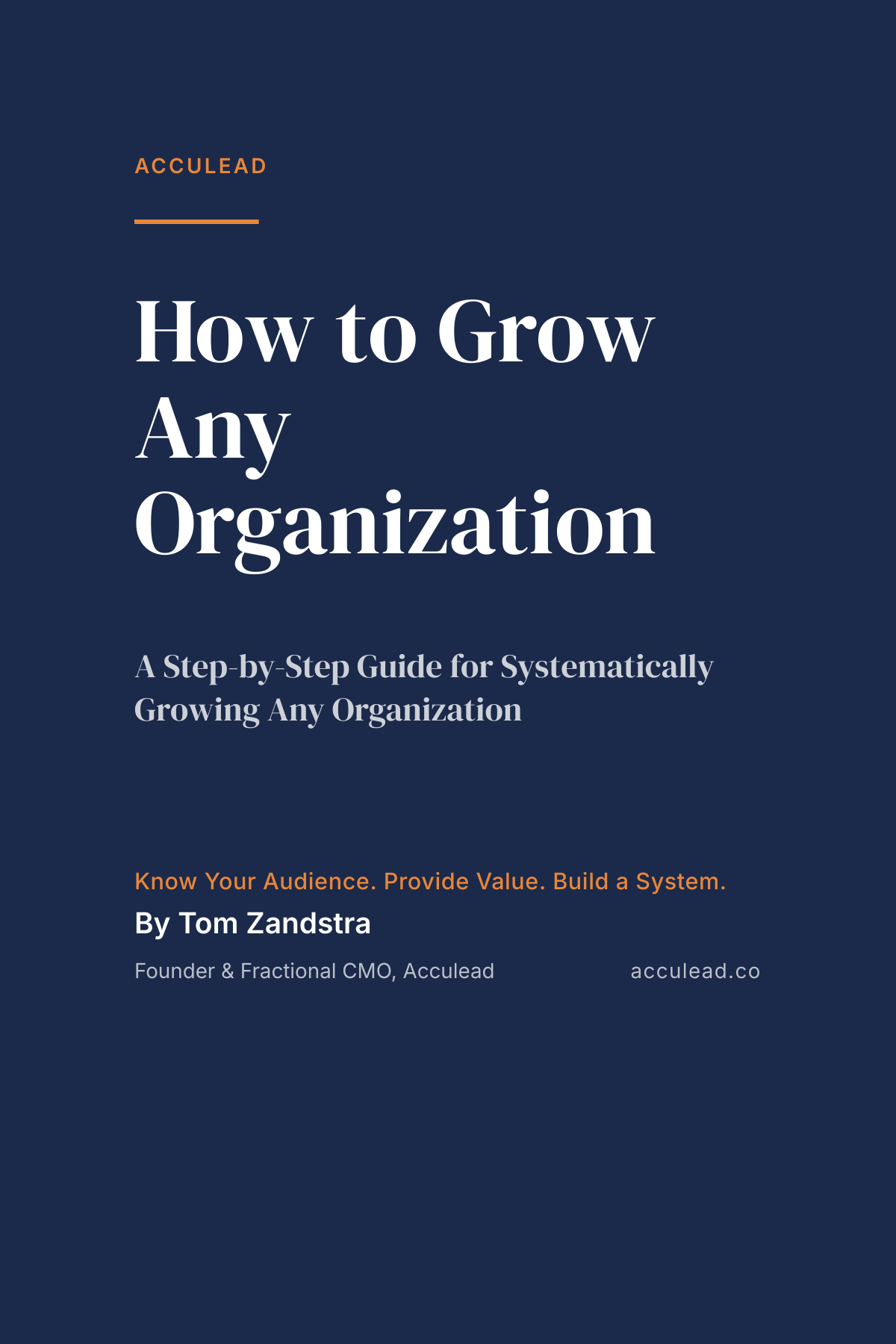
The full playbook behind Acculead’s methodology. 85 pages, sent straight to your inbox.
“All of these projects were successful, including 1,000+ registrations for our first webinar. Happy to recommend Thomas to any agency looking for a fractional CMO.”Dale Bertrand · Agency Owner
One call. We’ll look at your marketing, find what’s broken, and tell you exactly what we’d do. No pitch deck, no pressure.